Compound Interest Calculator Calculate compound interest with different frequencies and regular contributions.
Compound Interest Calculator
Calculate compound interest with different frequencies and regular contributions.
Enter Investment Details
Input initial investment, annual rate, time period, and compounding frequency.
Add Contributions
Optionally set a regular contribution amount per compounding period.
View Growth Projection
See final balance, interest earned, and year-by-year growth table.
What Is Compound Interest Calculator?
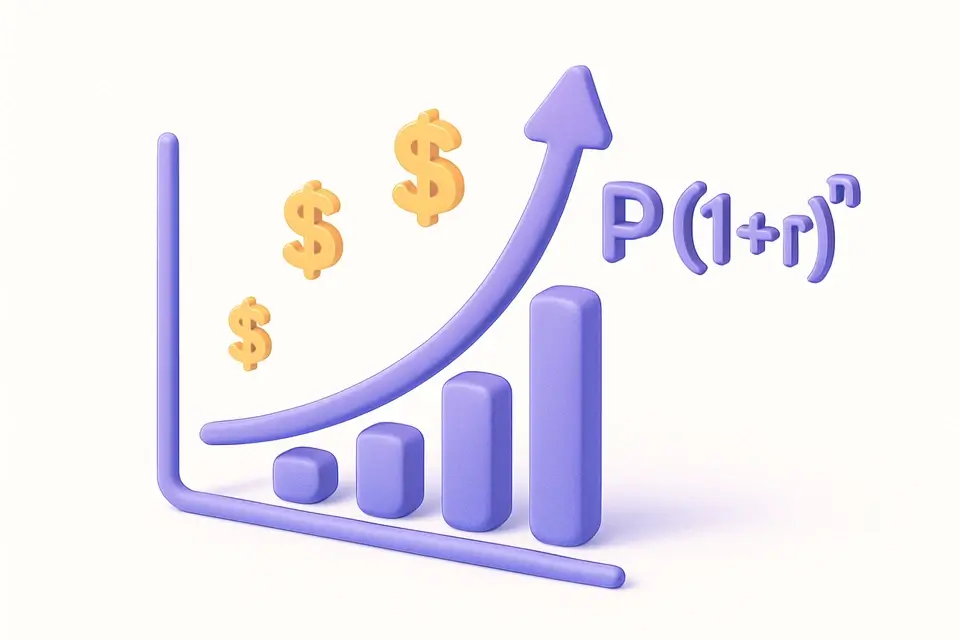
Compound interest is interest calculated on both the initial principal and all previously accumulated interest, creating exponential growth over time. Unlike simple interest (which only earns on the principal), compound interest allows your money to grow faster because each period's interest becomes part of the base for the next period's calculation. This calculator supports multiple compounding frequencies (annually, semi-annually, quarterly, monthly, daily) and allows regular contributions, making it a powerful tool for projecting investment growth, retirement savings, and the true cost of debt. The year-by-year breakdown shows how compound growth accelerates over time — the "magic of compounding" that makes long-term investing so powerful.
Why Use Compound Interest Calculator?
-
Five compounding frequencies from annual to daily
-
Regular contribution support for realistic planning
-
Year-by-year growth table showing compounding in action
-
Visual breakdown of contributions vs interest earned
-
Shows the true power of long-term compounding
Common Use Cases
Investment Planning
Project how your investments will grow over time with regular contributions.
Retirement Savings
See how early saving and compound growth build retirement wealth.
Debt Analysis
Understand how compound interest increases the true cost of debt.
Savings Accounts
Compare savings accounts with different compounding frequencies.
Technical Guide
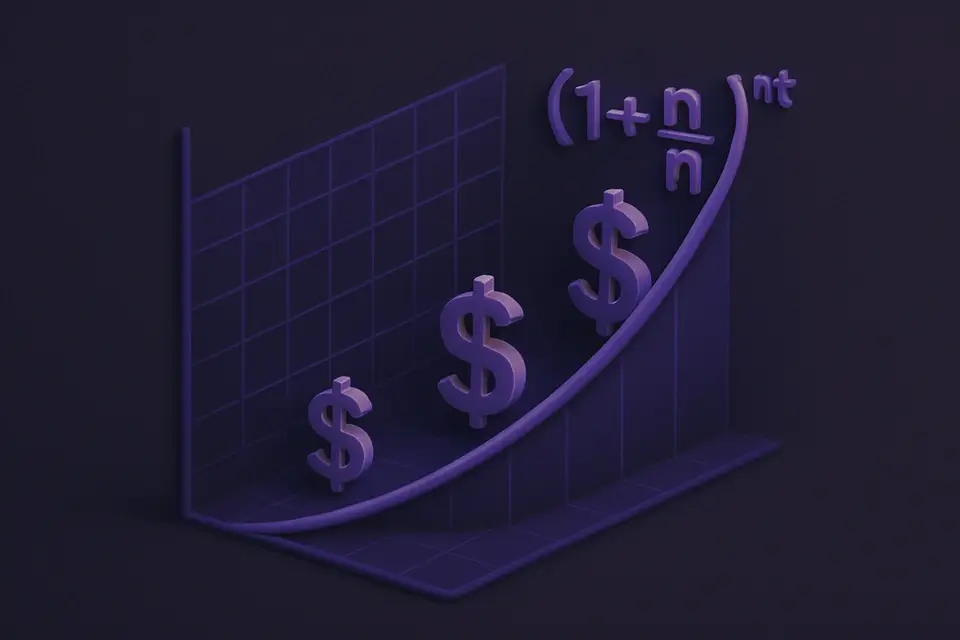
The compound interest formula without contributions is A = P(1 + r/n)^(nt), where A is the final amount, P is principal, r is annual rate, n is compounding frequency per year, and t is time in years. With regular contributions PMT, the future value of the contribution stream is FV = PMT × ((1+r/n)^(nt) − 1) / (r/n). The total is the sum of both components. Compounding frequency significantly affects results: at 10% annual rate on $10,000 for 10 years, annual compounding gives $25,937 while daily compounding gives $27,183. The difference between continuous compounding (A = Pe^(rt)) and daily compounding is negligible for practical purposes. The Rule of 72 provides a quick estimate: divide 72 by the annual rate to approximate the doubling time in years.
Tips & Best Practices
-
1Start investing early — time is the most powerful factor in compounding
-
2The Rule of 72: divide 72 by the interest rate to estimate doubling time
-
3More frequent compounding yields slightly higher returns
-
4Regular contributions amplify the compounding effect significantly
-
5Compound interest works against you on debt — pay it off quickly
Related Tools


Simple Interest Calculator
Calculate simple interest with flexible time period units (years, months, days).
🔢 Math & Calculators

Investment Return Calculator
Project future investment value with initial investment and regular monthly contributions.
🔢 Math & Calculators

Savings Goal Calculator
Calculate the monthly savings needed to reach a financial goal within a time frame.
🔢 Math & Calculators

Retirement Calculator
Project retirement savings and check if you're on track using the 4% rule.
🔢 Math & CalculatorsFrequently Asked Questions
Q What is the difference between simple and compound interest?
Q How does compounding frequency matter?
Q What is the Rule of 72?
Q How do regular contributions help?
Q Does this account for taxes?
About This Tool
Compound Interest Calculator is a free online tool by FreeToolkit.ai. All processing happens directly in your browser — your data never leaves your device. No registration or installation required.