Color Shade Generator Generate darker shades of any color with adjustable step count.
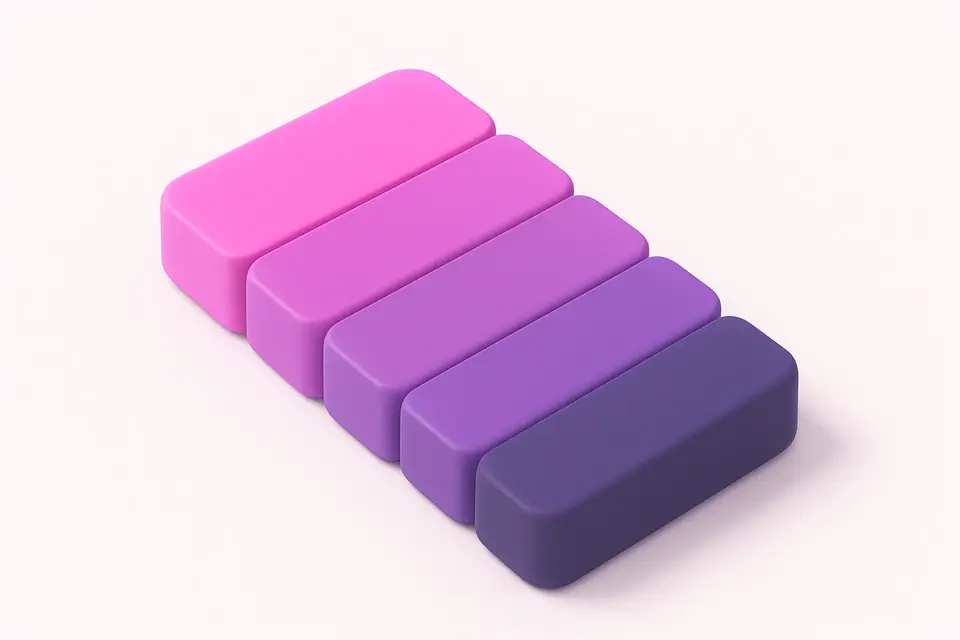
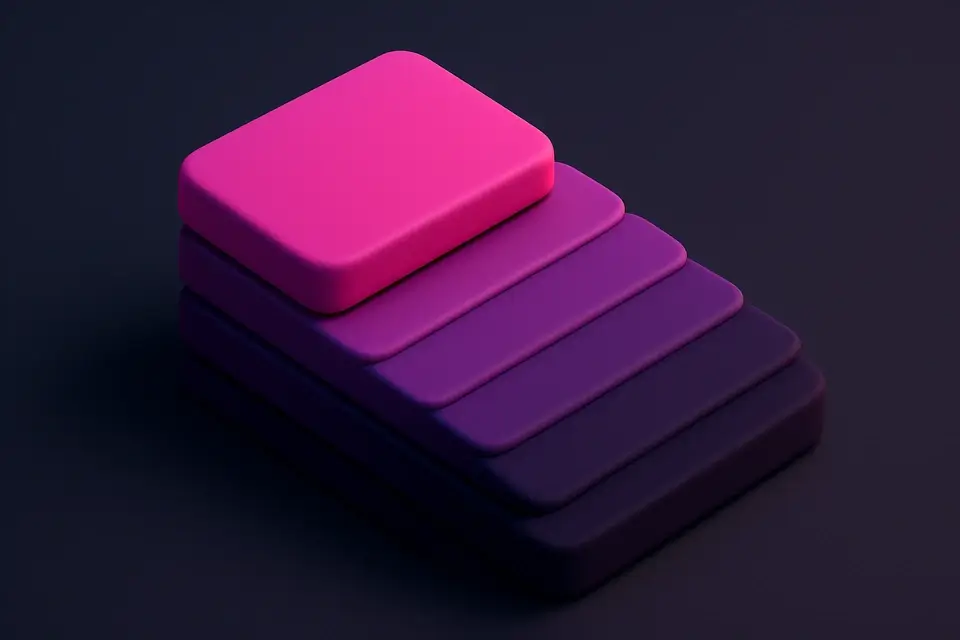
Color Shade Generator
Generate darker shades of any color with adjustable step count.
Pick Base Color
Select any color as your starting point.
Adjust Steps
Choose how many progressively darker shades to generate.
Copy Shades
Copy individual shades or the entire set.
What Is Color Shade Generator?
A color shade generator creates progressively darker versions of any base color by systematically reducing its lightness in HSL color space. Shades retain the original hue and saturation while moving toward black, creating a cohesive set of darker variants. This is essential for design systems where you need multiple intensities of a brand color — from the original for primary buttons to deep versions for text, borders, and hover states. Unlike simply adding black in RGB (which can shift the perceived hue), the HSL-based approach preserves color identity throughout the entire shade range. The adjustable step count lets you create anything from a simple three-shade set to a full fifteen-step scale.
Why Use Color Shade Generator?
-
HSL-based darkening preserves hue consistency across all shades
-
Adjustable step count (3 to 15) for any use case
-
Each shade shows its lightness percentage for reference
-
Perfect for building design system color scales
-
One-click copy for individual shades or complete set
Common Use Cases
Design Tokens
Generate numbered shade scales (600, 700, 800, 900) for design systems.
Hover States
Create darker button hover states that are consistent with the base color.
Text Colors
Find dark shades of brand colors for headings and body text.
Borders & Shadows
Get darker variants for borders, outlines, and shadow colors.
Technical Guide
The shade generator converts the base color to HSL and creates N shades by reducing lightness from the base value to near-zero. The formula for each shade is: L = baseLightness × (1 - i/(N-1)), where i goes from 0 to N-1. This creates an even distribution from the original color to near-black. The hue and saturation remain constant, ensuring all shades are perceptually the same color at different darkness levels. In color theory, a shade is specifically a color mixed with black, as opposed to a tint (mixed with white) or a tone (mixed with gray). The HSL approach is more perceptually uniform than RGB darkening, which would require adjusting all three channels proportionally.
Tips & Best Practices
-
1Use 9 steps to create a standard design system scale (100-900)
-
2The darkest shade works well for text on light backgrounds
-
3Combine shade and tint generators for a complete color scale
-
4Shades of warm colors (reds, oranges) make excellent dark backgrounds
-
5Test dark shades for sufficient contrast against your intended background
Related Tools
Color Picker
Interactive color picker with HEX, RGB, HSL, and CMYK outputs.
🎨 Color Tools
Monochromatic Palette Generator
Generate a monochromatic color palette from any base color.
🎨 Color Tools
Color Tint Generator
Generate lighter tints of any color with adjustable step count.
🎨 Color Tools
Color Mixer
Mix two colors together with adjustable ratio and see the full gradient.
🎨 Color Tools
Contrast Ratio Checker
Check WCAG contrast ratios between foreground and background colors.
🎨 Color ToolsFrequently Asked Questions
Q What is the difference between a shade and a tint?
Q Why is HSL better than RGB for darkening colors?
Q How many shade steps should I generate for a design system?
About This Tool
Color Shade Generator is a free online tool by FreeToolkit.ai. All processing happens directly in your browser — your data never leaves your device. No registration or installation required.