Build UTM-Tagged URLs for Campaign Tracking Build URLs with UTM parameters for tracking marketing campaigns in Google Analytics.


UTM Link Builder
Build URLs with UTM parameters for tracking marketing campaigns in Google Analytics.
Enter your URL
Paste the destination URL you want to track.
Add UTM parameters
Fill in source, medium, campaign, and optional term/content fields.
Copy the tagged URL
Copy the complete URL with UTM parameters for your campaign.
What Is UTM Link Builder?
The UTM Link Builder creates trackable URLs by appending UTM (Urchin Tracking Module) parameters. UTM parameters are tags added to URLs that allow Google Analytics and other analytics tools to identify exactly where your traffic comes from, which marketing medium drove it, and which campaign it belongs to. Without UTM tags, traffic from social media posts, email newsletters, and ads often appears as "direct" or "referral" in analytics — making it impossible to measure campaign performance. This tool builds properly formatted UTM URLs with quick-fill suggestions for common sources and mediums.
Why Use UTM Link Builder?
-
Quick-fill suggestions for common utm_source and utm_medium values
-
Proper URL encoding of all parameters
-
Validates URL format before generating
-
Supports all 5 UTM parameters including optional term and content
-
Copy-ready URLs for immediate campaign deployment
Common Use Cases
Social Campaigns
Track performance of posts across different social platforms.
Email Marketing
Measure click-through from email campaigns and newsletters.
Paid Advertising
Tag ad URLs for accurate campaign attribution in analytics.
Influencer Marketing
Give each influencer a unique UTM link to track their contribution.
Technical Guide
UTM parameters are appended to URLs as query string parameters: utm_source (required, identifies the traffic source), utm_medium (required, identifies the marketing medium), utm_campaign (required, identifies the campaign name), utm_term (optional, for paid search keywords), and utm_content (optional, for A/B testing different links). Google Analytics automatically recognizes these parameters and populates the Acquisition reports. Best practices: use consistent naming conventions (lowercase, underscores), be specific but concise, and document your UTM taxonomy. Avoid using UTM parameters for internal links (they'll reset session data). Our builder properly encodes special characters and validates the base URL before appending parameters.
Tips & Best Practices
-
1Use consistent lowercase naming: "facebook" not "Facebook" or "FB"
-
2Create a UTM naming convention document for your team
-
3Never use UTM parameters on internal links — it resets analytics sessions
-
4Use utm_content to differentiate between multiple links in the same campaign
-
5Document all UTM-tagged URLs in a spreadsheet for reference
Related Tools


Campaign URL Generator
Generate tracked campaign URLs for multiple platforms simultaneously.
📱 Social Media

Click-Through Rate Calculator
Calculate CTR with industry benchmarks for search, display, social, and email campaigns.
📱 Social Media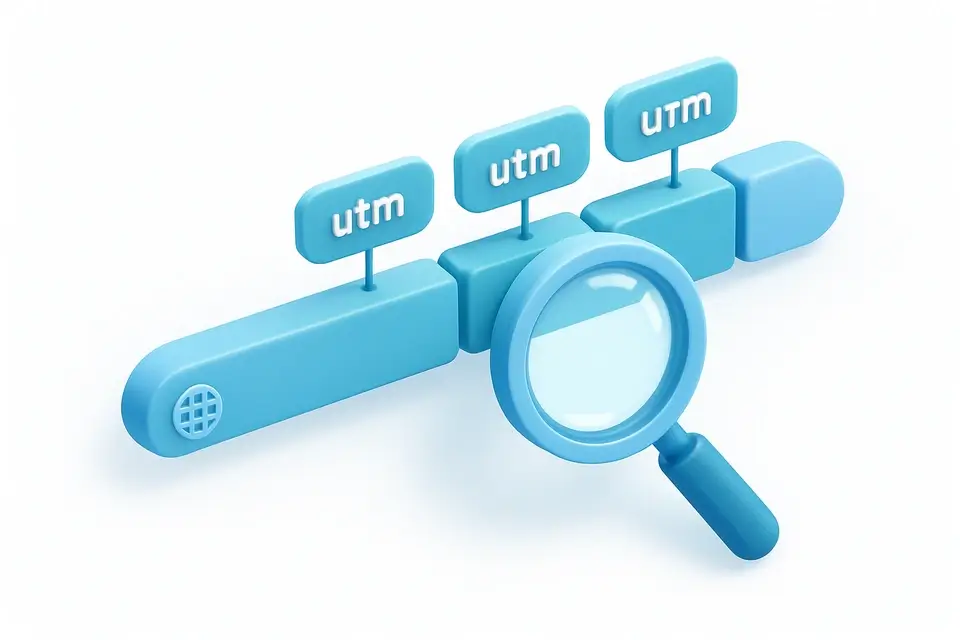

UTM Link Parser
Parse and extract UTM parameters from any URL for campaign analysis.
📱 Social Media

Social Media Report Template
Generate customizable social media performance report templates with multi-platform sections.
📱 Social MediaFrequently Asked Questions
Q What are UTM parameters?
Q Are UTM parameters case-sensitive?
Q Do UTM parameters affect SEO?
About This Tool
UTM Link Builder is a free online tool by FreeToolkit.ai. All processing happens directly in your browser — your data never leaves your device. No registration or installation required.