Convert Inductance Units — H, mH, µH & nH Convert between henries, millihenries, microhenries, and nanohenries.
Inductance Converter
Convert between henries, millihenries, microhenries, and nanohenries.
Enter inductance
Type the inductance value.
Select inductance units
Choose source and target inductance units.
View the converted inductance
Converted inductance appears instantly.
What Is Inductance Converter?
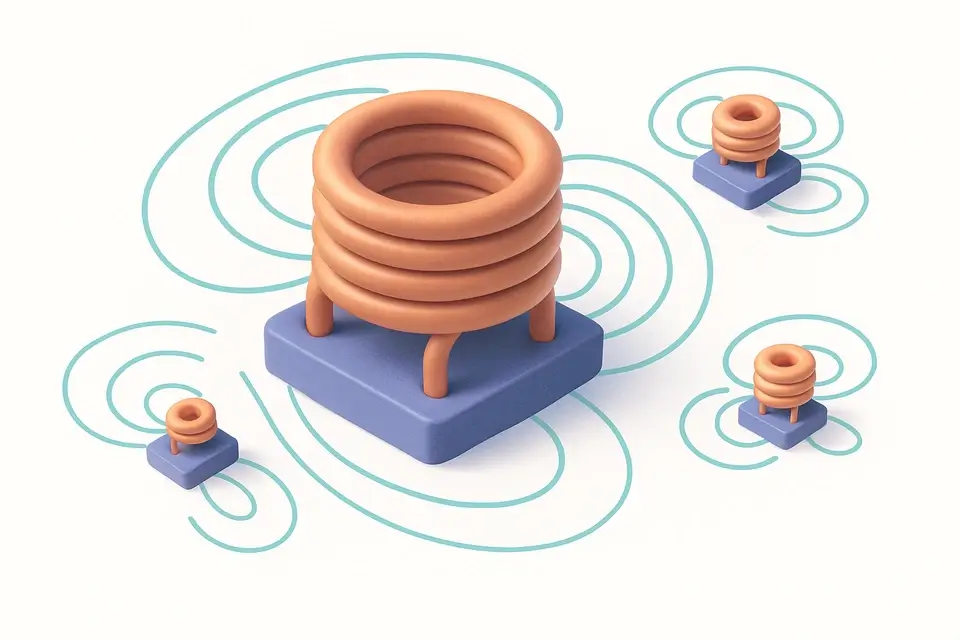
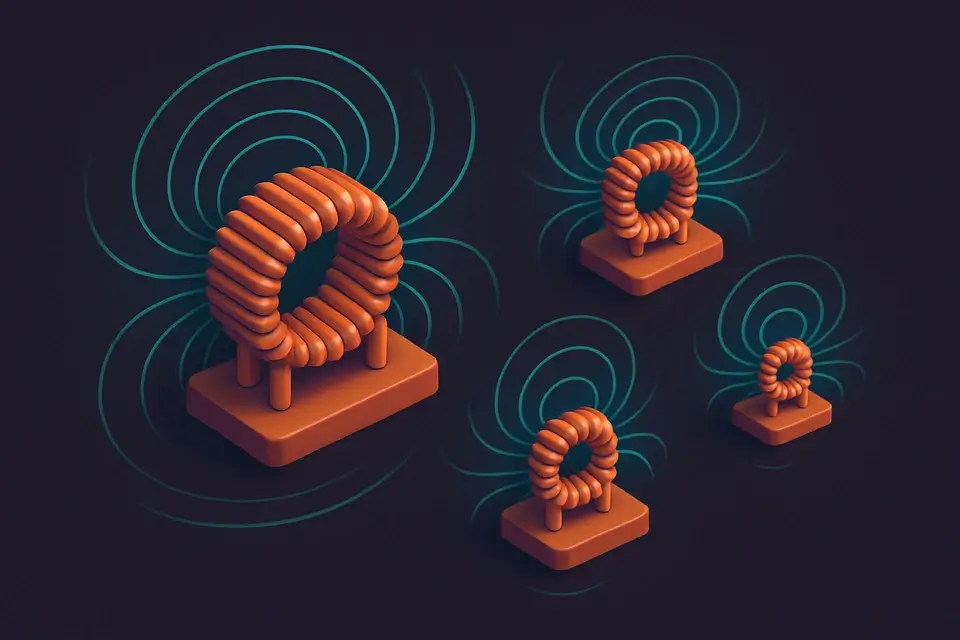
An inductance converter translates between different scales of the henry, the SI unit of electrical inductance. One henry is the inductance that produces one volt of EMF when the current changes at one ampere per second. Like the farad, one henry is a large value — most inductors range from nanohenries (nH, for RF circuits and PCB traces) through microhenries (µH, for power supplies and filters) to millihenries (mH, for audio crossovers and motor controls). Henries are encountered in large transformers and high-energy inductors.
Why Use Inductance Converter?
-
Covers nH to H — the full practical inductance range.
-
Essential for RF engineering and power supply design.
-
Real-time conversion for component selection.
-
Quick reference table.
Common Use Cases
RF Engineering
Convert between nH and µH for antenna matching and filter design.
Power Supply Design
Size output inductors in µH and mH for switching regulators.
Audio
Design crossover networks with mH inductors.
EMC/EMI
Specify ferrite bead inductance for electromagnetic compatibility.
Technical Guide
The henry (H) is defined by Faraday's law.
• 1 H = 1,000 mH
• 1 mH = 1,000 µH
• 1 µH = 1,000 nH
So: 1 H = 10³ mH = 10⁶ µH = 10⁹ nH
Common inductance values:
• PCB trace: 1-10 nH
• Ferrite bead: 10-1,000 nH
• RF inductor: 1-100 nH
• Power inductor (buck converter): 1-100 µH
• Audio crossover: 0.1-10 mH
• Power transformer (primary): 1-100 H
Inductance depends on geometry: L = µ₀µᵣN²A/l, where N is turns, A is cross-sectional area, l is magnetic path length, and µᵣ is relative permeability of the core material.
Tips & Best Practices
-
11 mH = 1,000 µH = 1,000,000 nH. Simple factors of 1,000.
-
2Switching power supply inductors are typically 1-100 µH.
-
3RF inductors are typically nH range — even PCB traces have inductance.
-
4Inductance increases with the square of the number of turns (L ∝ N²).
Related Tools

Frequency Converter
Convert between Hertz, kilohertz, megahertz, gigahertz, and RPM.
⚖️ Unit Converters

Electric Current Converter
Convert between amperes, milliamperes, microamperes, and kiloamperes.
⚖️ Unit Converters

Voltage Converter
Convert between volts, millivolts, microvolts, kilovolts, and megavolts.
⚖️ Unit Converters
Capacitance Converter
Convert between farads, millifarads, microfarads, nanofarads, and picofarads.
⚖️ Unit ConvertersFrequently Asked Questions
Q How many microhenries in a millihenry?
Q What inductance does a typical power supply use?
Q What is the inductance of a PCB trace?
Q How is inductance related to frequency?
Q What is a henry in terms of other units?
About This Tool
Inductance Converter is a free online tool by FreeToolkit.ai. All processing happens directly in your browser — your data never leaves your device. No registration or installation required.