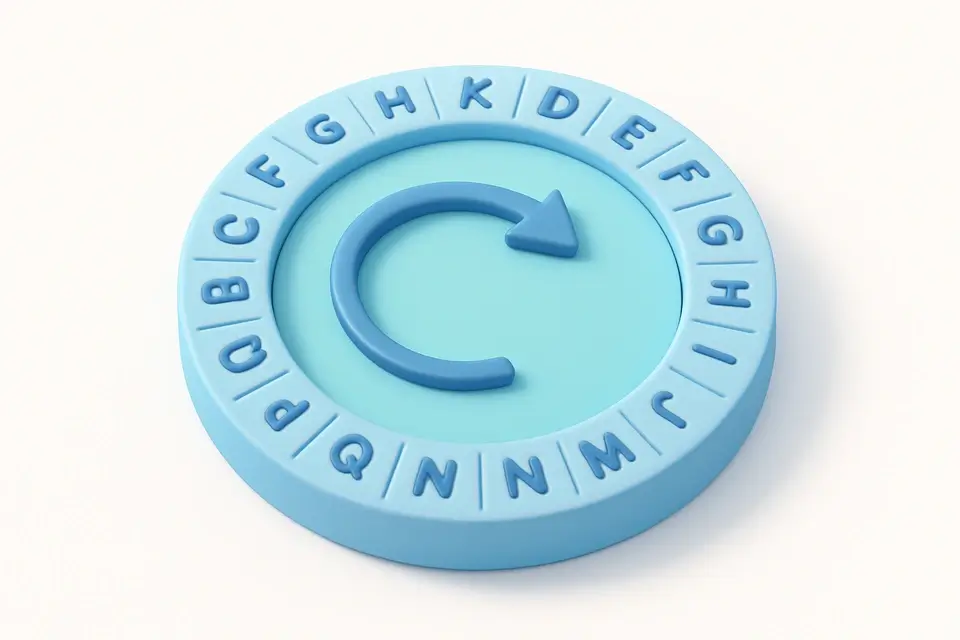
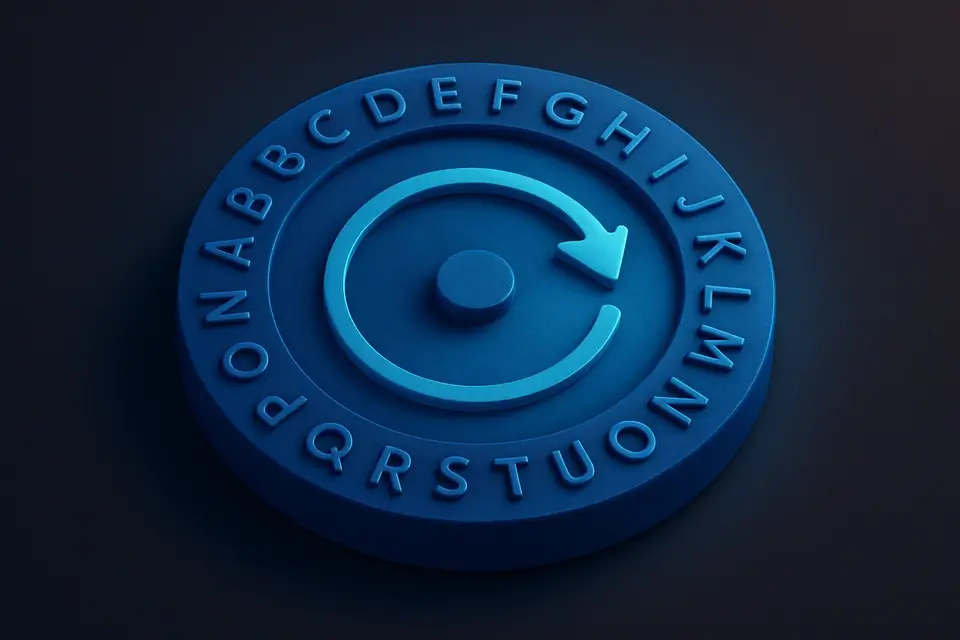
ROT13 Encoder / Decoder Apply ROT13 cipher — shift each letter by 13 positions. Encoding and decoding are the same operation.
ROT13 Encoder/Decoder
Apply ROT13 cipher — shift each letter by 13 positions. Encoding and decoding are the same operation.
Enter Your Plaintext
Type or paste text to apply ROT13 encoding.
View the Shifted Output
See each letter shifted by 13 positions in the alphabet.
Copy the Encoded Text
Copy the encoded/decoded text. Apply again to reverse.
What Is ROT13 Encoder/Decoder?
ROT13 is a simple letter substitution cipher that shifts each letter by 13 positions in the alphabet. Since the English alphabet has 26 letters, applying the cipher twice returns the original text — making it its own inverse. "Hello" becomes "Uryyb", and applying it to "Uryyb" gives back "Hello". The cipher is commonly used to hide spoilers, puzzle answers, and mildly sensitive content online. It's not encryption — it provides no real security — but it's useful for simple text obfuscation.
Why Use ROT13 Encoder/Decoder?
-
Self-inverse: encode and decode with the same operation
-
Apply twice to get back the original text
-
Classic cipher used for spoiler hiding and puzzles
-
Preserves numbers, spaces, and punctuation unchanged
-
Instant, client-side processing
Common Use Cases
Spoiler Hiding
Hide movie, book, or game spoilers that readers can easily decode when ready.
Puzzle Creation
Encode puzzle answers or hints using ROT13 for interactive games.
Simple Obfuscation
Mildly obfuscate text to prevent casual reading without providing real security.
CTF Challenges
ROT13 is a common basic cipher in capture-the-flag competitions.
Technical Guide
ROT13 shifts each letter by 13 positions using modular arithmetic: newChar = ((charCode - base + 13) % 26) + base, where base is 65 for uppercase (A-Z) and 97 for lowercase (a-z). The modulo 26 wraps Z back to A and z back to a. Non-alphabetical characters (digits, spaces, punctuation) pass through unchanged. Since 13 is exactly half of 26, the operation is its own inverse: ROT13(ROT13(text)) = text. This is a special case of the Caesar cipher with shift 13.
Tips & Best Practices
-
1ROT13 is its own inverse — apply it twice to get original text
-
2Only letters are shifted; numbers and punctuation remain unchanged
-
3ROT13 provides zero security — it's obfuscation, not encryption
-
4Used extensively on Usenet forums for hiding spoilers and jokes
-
5A = N, B = O, ..., M = Z, N = A, O = B, ..., Z = M
Related Tools


Text Reverser
Reverse any text character by character.
📝 Text Tools

Text to Binary
Convert text to binary (0s and 1s) representation.
📝 Text Tools
Text to Hex
Convert text to hexadecimal representation.
📝 Text Tools

Pig Latin Converter
Convert English text to Pig Latin word game language.
📝 Text Tools

Morse Code Encoder
Convert text to Morse code (dots and dashes).
📝 Text ToolsFrequently Asked Questions
Q Is ROT13 encryption?
Q Why does applying ROT13 twice give back the original?
Q Does ROT13 affect numbers and punctuation?
Q What is ROT13 used for?
Q Is ROT13 the same as Caesar cipher?
About This Tool
ROT13 Encoder/Decoder is a free online tool by FreeToolkit.ai. All processing happens directly in your browser — your data never leaves your device. No registration or installation required.