Split Images Into Grid Tiles Split an image into a grid of equally sized tiles for puzzles, printing, or Instagram grids.
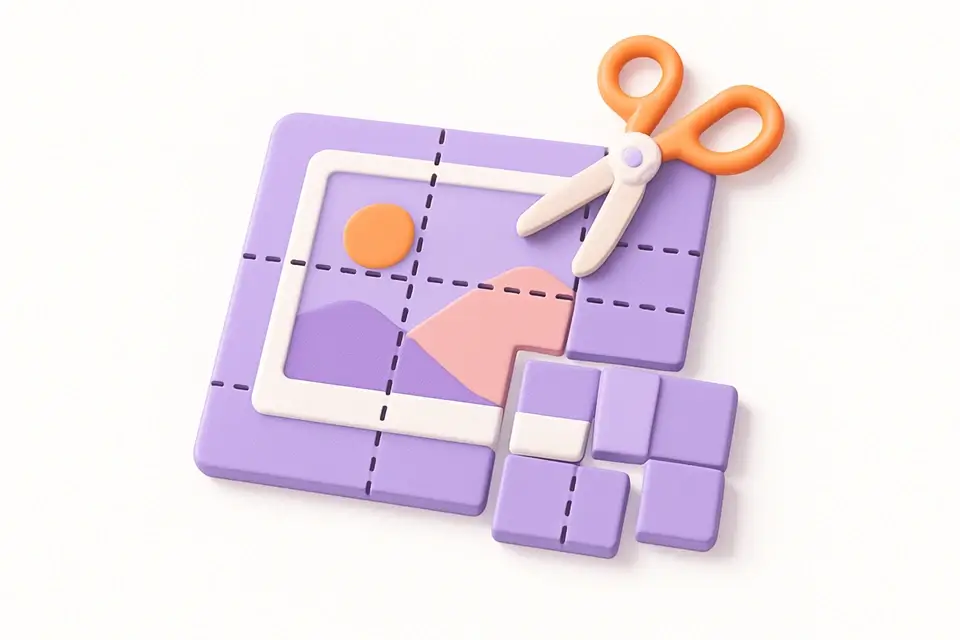
Image Splitter
Split an image into a grid of equally sized tiles for puzzles, printing, or Instagram grids.
Upload Image
Drop or select an image you want to split into tiles.
Set Grid
Choose the number of rows and columns for the tile grid.
Download Tiles
Preview the tiles and download individually or all at once.
What Is Image Splitter?
An image splitter is a tool that divides a single image into a grid of equally sized tile images, allowing users such as graphic designers and social media managers to create custom grids for various applications. It solves the specific problem of needing to split an image into multiple parts with precise control over the number of rows and columns, which is particularly useful when creating Instagram grid posts or extracting game sprites.
The tool achieves this by using the Canvas API to slice the image precisely at calculated boundaries, ensuring that each tile is exported as a separate PNG file with accurate dimensions. What makes it different from other photo editing software is its ability to dynamically adjust the number of rows and columns, allowing users to create an exact number of tiles needed for their project, whether it's a 3x3 grid or a 10x10 image grid cutter.
By utilizing features such as range inputs for specifying rows and columns, it provides users with fine-grained control over the output, making it an ideal solution for tasks like creating puzzle pieces or large-format printing across multiple pages. As a tile image splitter, it can handle images of various sizes and formats, exporting each tile as a separate PNG file that can be easily downloaded individually or in bulk using the download all tiles feature.
Why Use Image Splitter?
-
Split into any NxN grid configuration
-
Click individual tiles to download or batch download all
-
Pixel-perfect splitting with no overlap or gaps
-
Instant processing — no upload needed
Common Use Cases
Instagram Grids
Split panoramas or artwork into 3x3 grids for Instagram gallery posts.
Puzzle Creation
Create jigsaw-style tile pieces from any photograph.
Large Format Print
Split oversized images into printable sections for assembly.
Game Assets
Extract individual tiles from tilemap images for game engines.
Technical Guide
The tool works by using the React library to manage state and handle user interactions, such as uploading an image file through the FileDropzone component. When an image is uploaded, it creates a URL object for the file using URL.createObjectURL, which is then used as the source for an Image object. The Image object's onload event handler calculates the tile dimensions by dividing the image width by the number of columns and the height by the number of rows, both of which are controlled by range inputs that allow users to specify between 1 and 10 rows and columns.
The Canvas API is used to extract each tile from the source image, with the canvas element's width and height set to the calculated tile dimensions. The drawImage method is then used to draw the corresponding region of the source image onto the canvas, which is then exported as a PNG file using the toDataURL method. This process is repeated for each tile, resulting in an array of PNG files that are stored in the component's state. The tiles are displayed as a grid, with each tile wrapped in an img element and assigned a unique key based on its index. When a tile is clicked, it triggers the downloadOne function, which creates a new link element and simulates a click event to initiate the download.
The tool also uses the useState hook to manage the image state, the useRef hook to reference the canvas element, and the useCallback hook to memoize functions such as handleFile, split, downloadOne, and downloadAll. The useEffect hook is used to clean up the URL object when the component unmounts or the image changes. The resulting PNG files are named using a row_col index format, allowing for easy reassembly of the original image. Any remainder pixels from non-evenly-divisible dimensions are trimmed from the right and bottom edges, ensuring that each tile has the correct dimensions.
Tips & Best Practices
-
1Use square source images for Instagram 3x3 grids
-
2Higher resolution sources produce better tile quality
-
3Click individual tiles to download specific ones
-
4Combine with Image Resizer to prepare source dimensions
Related Tools

Image Crop
Crop images with a visual selection rectangle to remove unwanted areas.
🖼️ Image Tools
Image Resizer
Resize images by exact pixel dimensions or percentage while maintaining aspect ratio.
🖼️ Image Tools

Image Collage
Combine multiple images into a single collage with customizable layouts and spacing.
🖼️ Image Tools
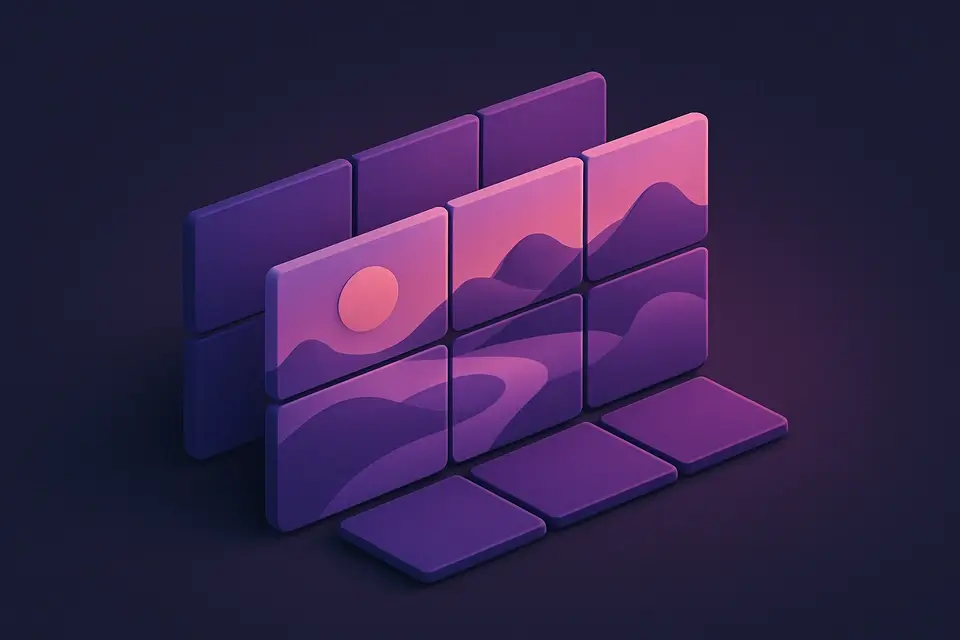
Image Grid Maker
Split a single image into a grid of equal-sized tiles for Instagram grids and puzzles.
🖼️ Image ToolsFrequently Asked Questions
Q Max grid size?
Q Output format?
Q Non-square images?
Q Download all at once?
Q Tile naming?
About This Tool
Image Splitter is a free online tool by FreeToolkit.ai. All processing happens directly in your browser — your data never leaves your device. No registration or installation required.