Create HMAC Hashes Online Generate HMAC digests with multiple hash algorithms.


HMAC Generator
Generate HMAC digests with multiple hash algorithms.
Select Algorithm
Choose HMAC-MD5, SHA-256, SHA-512, or another algorithm from the buttons.
Enter Key and Input
Type your secret key and the message to hash in the respective fields.
Copy HMAC
Click Copy to copy the output hash to your clipboard.
What Is HMAC Generator?
A HMAC Generator is a cryptographic tool that combines a message authentication code with a secret key to verify the integrity and authenticity of data, adhering to RFC 2104 standards. Cryptographers and developers use it to ensure secure communication over insecure channels by generating an HMAC hash from input text and a secret key. One specific problem it solves is preventing tampering attacks by allowing recipients to validate the sender's identity and detect any modifications made during transmission.
Developers who work with message authentication codes, such as HMAC SHA256, rely on this tool to generate secure hashes for their applications. What makes this particular implementation distinct is its support for multiple algorithms, including HMAC-MD5, SHA1, SHA256, SHA384, SHA512, SHA3, and RIPEMD160, all of which are implemented using the crypto-js library. It also features a client-side architecture, ensuring that all computations occur locally without exposing sensitive information to servers.
It allows users to select from seven different algorithms via an intuitive interface, input their secret key and message text, and then generates the corresponding HMAC hash for verification purposes. As an HMAC online tool, it simplifies the process of generating message authentication codes for developers working with various cryptographic protocols. By providing a straightforward way to create secure HMAC hashes, including HMAC SHA256, it facilitates the development of secure communication systems that rely on these cryptographic primitives.
Why Use HMAC Generator?
-
Fast, accurate processing
-
100% client-side — data never leaves your browser
-
Free online tool with no signup required
-
Mobile-friendly with 44px touch targets
Common Use Cases
Development
Use in software development workflows.
Security
Cryptographic and security applications.
Education
Learn about algorithms and techniques.
Verification
Verify and validate data integrity.
Technical Guide
The tool uses the CryptoJS library to implement seven different hash functions for generating message authentication codes, including HmacMD5, HmacSHA1, HmacSHA256, HmacSHA384, HmacSHA512, HmacSHA3, and HmacRIPEMD160. These functions take two inputs: a message and a secret key, which are combined using the XOR operation with ipad and opad constants to produce an inner and outer hash. The resulting HMAC is then returned as a hexadecimal string. When a user selects an algorithm from the list of available options, it updates the state variable `algorithm` to store the chosen value, which determines the specific hash function used for computation.
The dual-hash construction approach secures even vulnerable hashes by first hashing the key with the message and then combining this result with another hashed version of the key. This process resists length-extension attacks that could otherwise compromise the integrity of the generated HMAC. In cases where keys exceed the block size, they are hashed first to produce a fixed-size output before being used in the HMAC computation. The React library is utilized for building the user interface and managing state changes when users interact with input fields or buttons.
The `hmacFns` object stores references to each hash function implemented by CryptoJS, allowing it to look up and invoke the correct function based on the currently selected algorithm. When a user clicks the "Copy HMAC" button, it calls the `handleCopy` function which attempts to copy the generated HMAC output to the clipboard using the `copyToClipboard` utility function from the `@/lib/utils` module. If copying is successful, it temporarily displays a confirmation message indicating that the HMAC has been copied.
The tool uses JavaScript's built-in support for asynchronous operations and React's state management features to handle user input and update the display of generated HMAC values in real-time as users type or change algorithm selections. It runs entirely on the client-side due to its 'use client' directive, meaning all computations are performed locally within a web browser without transmitting sensitive information over networks. This implementation also adheres to best practices for security by ensuring that secret keys and messages remain confidential throughout the HMAC generation process.
Tips & Best Practices
-
1All processing happens in your browser
-
2Results are deterministic for the same input
-
3Use Copy button to quickly grab output
-
4Works on mobile devices with touch-friendly interface
Related Tools


Base64 Encode
Encode text to Base64 format instantly in your browser.
🔐 Encoding & Crypto

MD5 Hash Generator
Generate MD5 hash digests.
🔐 Encoding & Crypto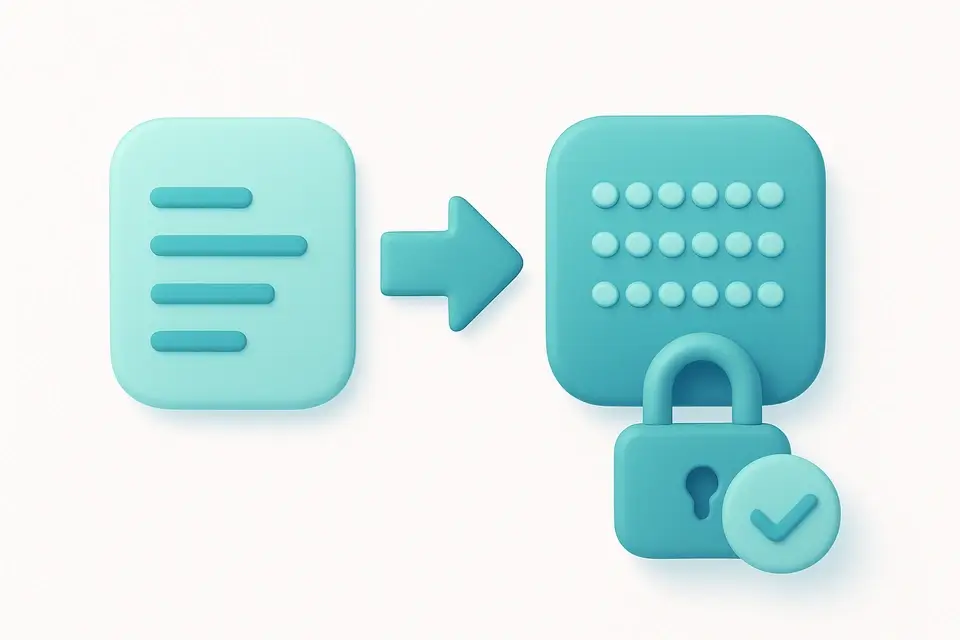

SHA-256 Hash Generator
Generate SHA-256 hash digests.
🔐 Encoding & Crypto

AES Encrypt/Decrypt
Encrypt and decrypt text using AES with a passphrase.
🔐 Encoding & CryptoFrequently Asked Questions
Q Is this tool free?
Q Is my data secure?
Q Does it work on mobile?
Q What browsers are supported?
Q Can I use this offline?
About This Tool
HMAC Generator is a free online tool by FreeToolkit.ai. All processing happens directly in your browser — your data never leaves your device. No registration or installation required.