Convert Text to Base64 Encode text to Base64 format instantly in your browser.


Base64 Encode
Encode text to Base64 format instantly in your browser.
Enter Text
Type or paste the text you want to encode into the input field.
View Encoded Output
The Base64-encoded result appears instantly in real time.
Copy Result
Click the Copy button to copy the encoded string to your clipboard.
What Is Base64 Encode?
Base64 is a binary-to-text encoding scheme that represents binary data using 64 ASCII characters (A-Z, a-z, 0-9, +, /). It was designed to carry binary data across channels that only support text. Every 3 bytes of input produce 4 encoded characters, with padding (=) added when the input length is not a multiple of 3. The encoding increases data size by approximately 33%, but ensures safe transport through text-only protocols like email (MIME), JSON, XML, and data URIs. This tool uses the browser's native btoa() function with full Unicode support via encodeURIComponent, ensuring accurate encoding of multi-byte characters including emoji and international scripts. All processing happens entirely in your browser — your data never leaves your device.
Why Use Base64 Encode?
-
Instant encoding with real-time output as you type
-
Full Unicode and UTF-8 support including emoji and CJK characters
-
100% client-side — your data never leaves your browser
-
Free online tool with no signup, limits, or ads
Common Use Cases
Data URIs
Embed images and files directly in HTML/CSS using data: URIs.
API Development
Encode credentials and payloads for HTTP Basic Auth and REST APIs.
Email Attachments
Encode binary attachments for MIME email transport.
Configuration Files
Safely embed binary data in JSON, YAML, or XML config files.
Technical Guide
The encoding works by taking groups of 3 bytes (24 bits) and splitting them into 4 groups of 6 bits. Each 6-bit value maps to one of 64 characters in the Base64 alphabet: A-Z (0-25), a-z (26-51), 0-9 (52-61), + (62), and / (63). When the input length is not divisible by 3, padding characters (=) are appended. The standard alphabet is defined in RFC 4648. URL-safe variant replaces + with - and / with _ to avoid URL encoding issues. This tool handles Unicode by first encoding the string to UTF-8 via encodeURIComponent, then applying btoa() to the resulting byte sequence.
Tips & Best Practices
-
1Use for embedding small images as data URIs in HTML and CSS
-
2Remember that Base64 increases size by ~33% — not ideal for large files
-
3For URL-safe output, manually replace + with - and / with _
-
4Base64 is encoding, not encryption — it provides no security
Related Tools

Base64 Decode
Decode Base64-encoded strings back to plain text instantly.
🔐 Encoding & Crypto

Base64 Image Encoder
Convert images to Base64-encoded data URIs for embedding in HTML and CSS.
🔐 Encoding & Crypto
URL Encode (Full)
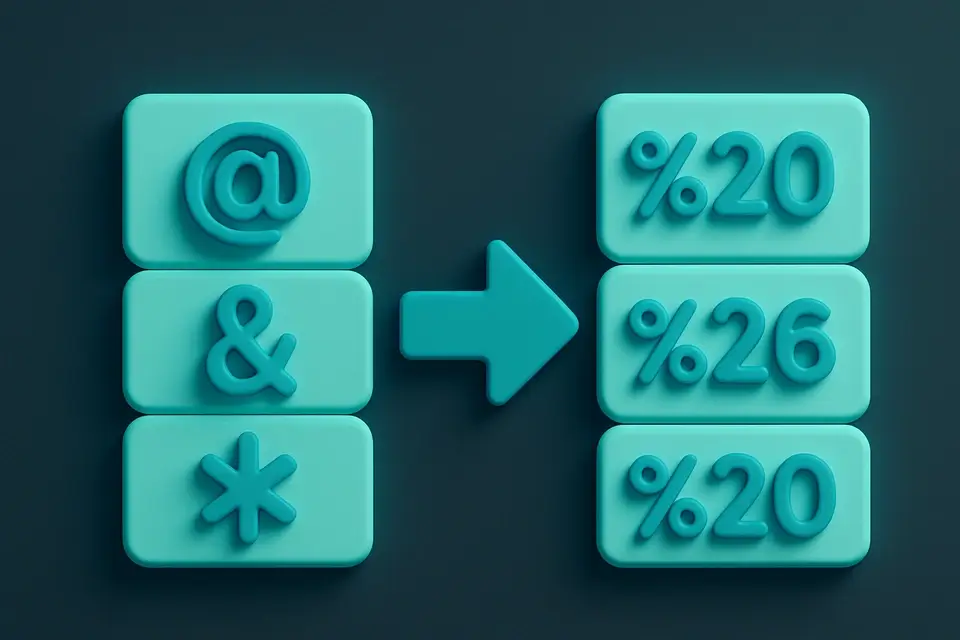
Percent-encode all special characters in a URL string.
🔐 Encoding & Crypto

UTF-8 Encode/Decode
View UTF-8 byte representations of text and decode byte sequences.
🔐 Encoding & CryptoFrequently Asked Questions
Q Is this tool free?
Q Is my data secure?
Q Does it support Unicode?
Q What browsers are supported?
Q What is the maximum input size?
About This Tool
Base64 Encode is a free online tool by FreeToolkit.ai. All processing happens directly in your browser — your data never leaves your device. No registration or installation required.