Verify File Checksums & SHA Hashes in Browser Calculate and verify file checksums using SHA algorithms.


Checksum Verifier
Calculate and verify file checksums using SHA algorithms.
Select algorithm
Choose SHA.
Upload
Select file.
Compare
Paste expected hash.
What Is Checksum Verifier?
A Checksum Verifier is a tool that calculates and verifies the integrity of files by generating a unique digital fingerprint, known as a checksum or file hash, using various SHA algorithms such as SHA-1, SHA-256, SHA-384, and SHA-512. Developers and security professionals use it to ensure data integrity and authenticity when transferring or storing files. One specific problem it solves is detecting accidental or malicious changes to files during transmission or storage, which can be critical in applications where file integrity is paramount.
It tackles this issue by allowing users to select a specific SHA algorithm and then generates the corresponding checksum for a given file using the Web Crypto API, all within the browser without uploading the file. The tool also enables comparison against an expected checksum value, providing a clear indication of whether the file has been tampered with or corrupted.
What sets it apart is its ability to handle different types of SHA checksums and its user-friendly interface for copying the generated hash, which can be useful for further verification or documentation purposes. For instance, once a file's checksum is generated as a hexadecimal string, it can be easily copied to the clipboard for use in verifying the file's integrity elsewhere, such as comparing against an expected sha checksum value to confirm that the file has not been altered during transmission.
Why Use Checksum Verifier?
-
Multiple SHA algorithms
-
File upload
-
Hash comparison
-
100% client-side
Common Use Cases
Downloads
Verify downloads.
Backups
Check integrity.
Transfers
Verify files.
Security
Detect changes.
Technical Guide
Under the hood, it works by using the Web Crypto API's subtle.digest() function to generate a checksum for a given file. This process starts when a user selects a file and an algorithm such as SHA-256, which produces a 32-byte or 64-character hexadecimal hash. The tool reads the selected file into memory as an ArrayBuffer, then passes this data to subtle.digest(), along with the chosen algorithm. The resulting digest is a unique digital fingerprint that can be used for integrity verification.
The avalanche effect inherent in SHA algorithms ensures that even small changes to the input file produce drastically different hashes, making it suitable for detecting accidental or malicious modifications. When comparing against an expected checksum value, the tool converts both the generated and expected hashes to lowercase before performing a string comparison, ensuring case-insensitivity. This process allows users to verify whether their files have been tampered with during transmission or storage.
The React library is used to manage state changes within the application, such as updating the displayed hash when the algorithm or file is changed. The useState hook maintains variables like algo and expected, while useCallback handles asynchronous operations like generating the checksum from a file's ArrayBuffer and copying it to the clipboard using functions from the @/lib/utils module. Array manipulation techniques are also employed to convert the resulting digest into a hexadecimal string representation of the hash.
It utilizes specific technologies including React for state management and user interface updates, Web Crypto API for cryptographic operations like generating digests, and JavaScript's built-in array methods to process binary data as hexadecimal strings. This combination enables efficient and secure checksum generation directly within the browser without requiring file uploads or external servers, making it a useful tool in scenarios where file integrity must be verified locally.
Tips & Best Practices
-
1Select SHA-256 as the algorithm to verify file integrity using a widely-used hash function
-
2Paste an expected checksum value into the input field to trigger automatic verification
-
3Choose a different algorithm, such as SHA-1 or SHA-384, to change the hash calculation
-
4Enter a new expected checksum value to re-evaluate the result without reloading the page
-
5Click the Copy button to store the calculated file hash in the clipboard for further use
Related Tools


MD5 Hash Generator
Generate MD5 hash digests.
🔐 Encoding & Crypto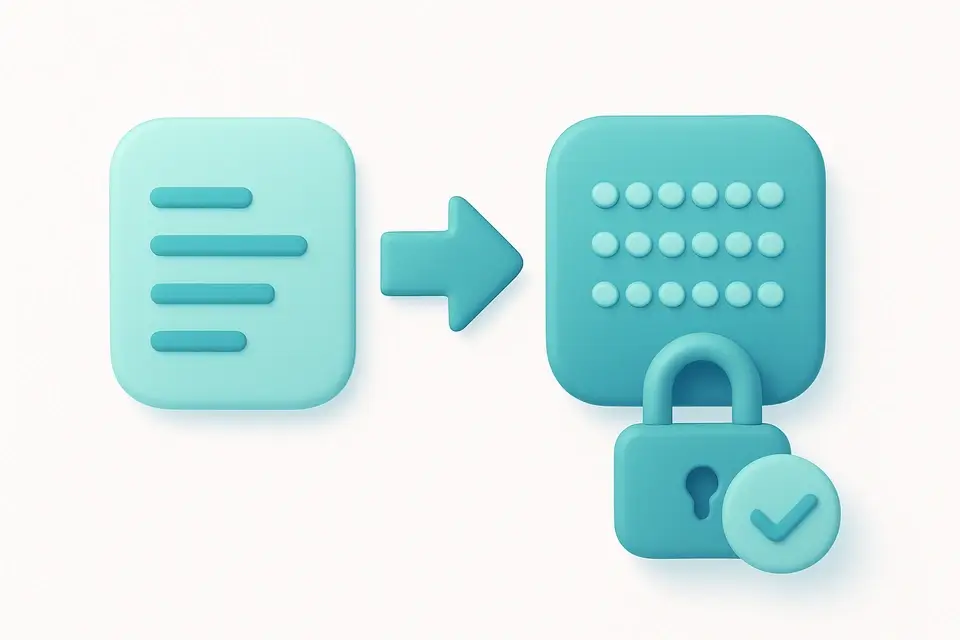

SHA-256 Hash Generator
Generate SHA-256 hash digests.
🔐 Encoding & Crypto

File Hash Calculator
Calculate MD5, SHA-256, and SHA-512 hashes of any file in your browser.
🔐 Encoding & Crypto

Password Hash Verifier
Verify passwords against SHA hash digests.
🔐 Encoding & CryptoFrequently Asked Questions
Q Is the checksum verifier free?
Q Are my files uploaded to a server?
Q What is the maximum file size?
Q Which SHA algorithm should I use?
Q Can it detect file corruption?
About This Tool
Checksum Verifier is a free online tool by FreeToolkit.ai. All processing happens directly in your browser — your data never leaves your device. No registration or installation required.